
Trans Escravos Pipeline Spill
The 24’’ Trans Excravos Pipeline suffered a series of explosive attacks in February 2009 during the period of militant attacks on oil pipeline facilities in the Niger Delta.
This resulted in 33, separate damaged points along a 3.5km stretch of the pipeline. As a result up to 30,000bbls of crude oil was released into the environment.
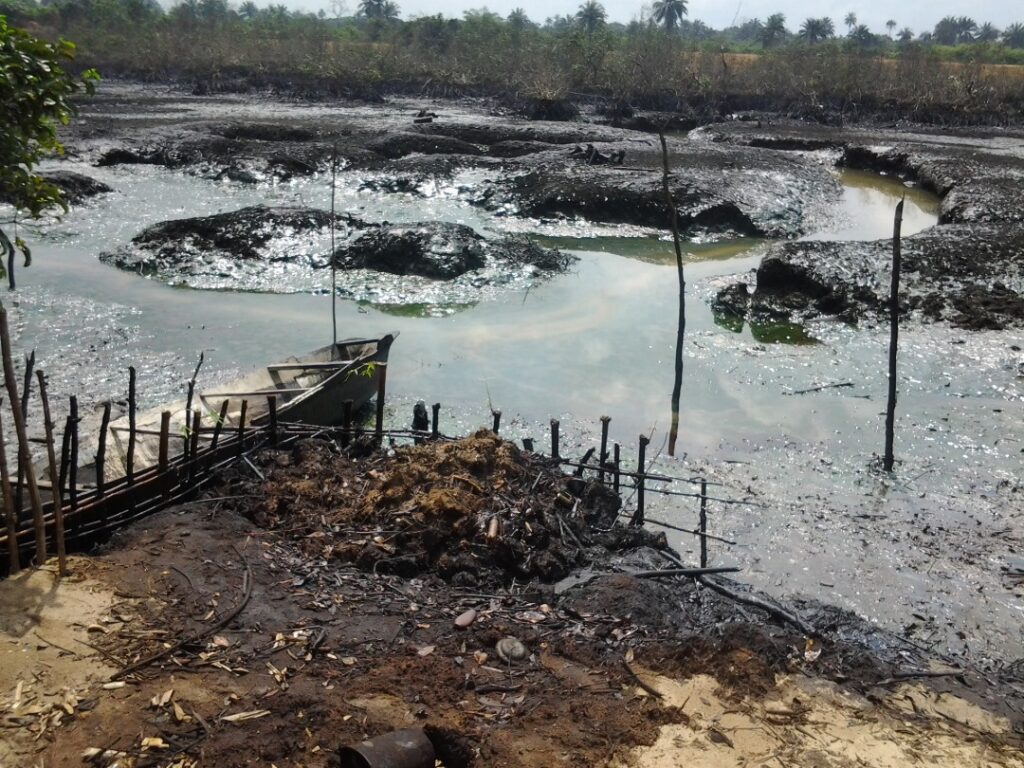
Before
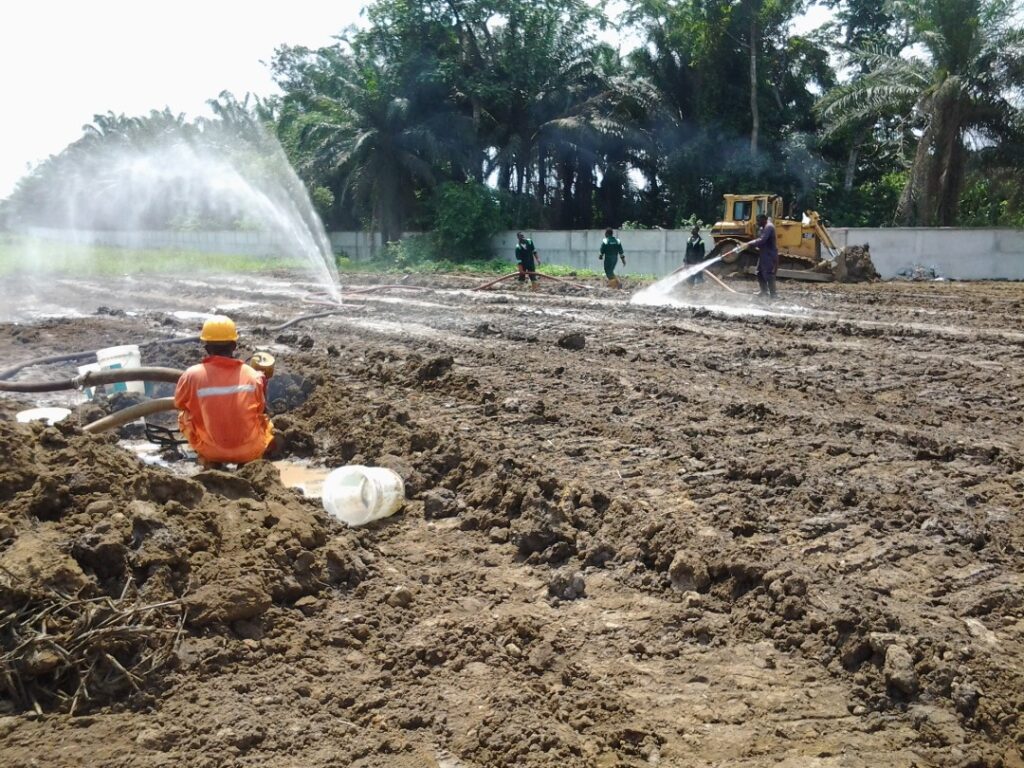
During
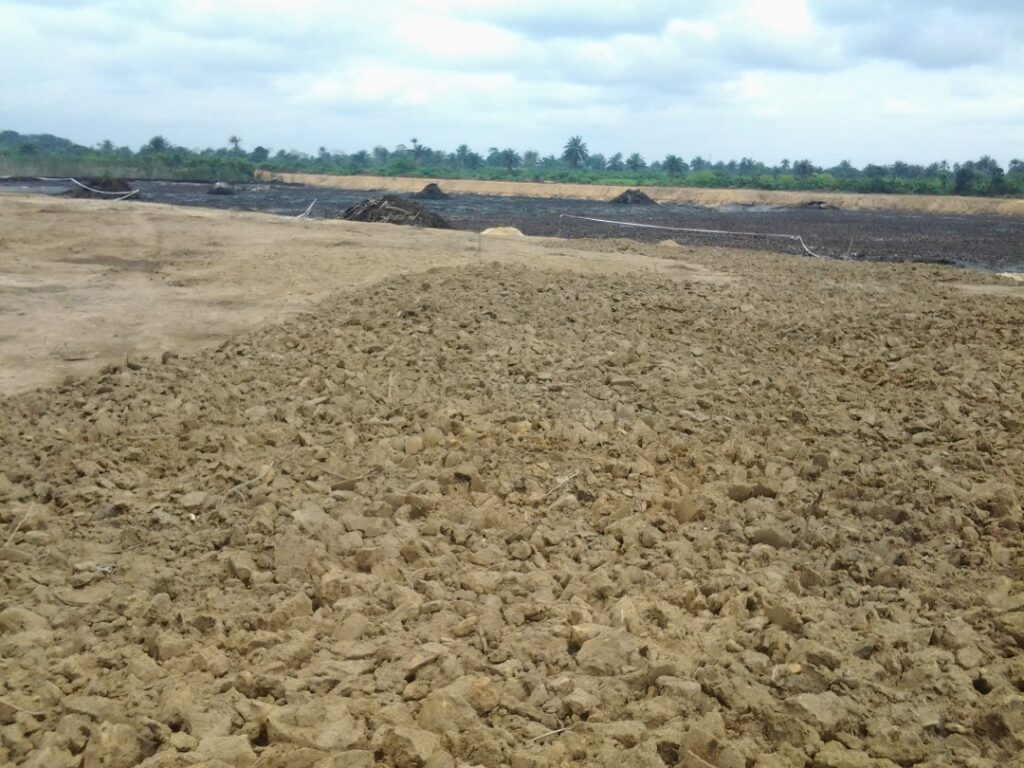
After
The lateral extent of impact was substantial and in some cases extending up to 250m beyond the boundary of the SPDC right of way (ROW) thereby impacted 3rd Party land, forests, fish ponds and fishing camps.
Pipeline repairs commenced in 2009 and spanned into 2010. This was followed by spill recovery and cleanup which ended mid 2010. A large fire broke out at the site in April 2010 which burnt a substantial area of forest impacted by the earlier spill.
The extent of impact caused by the sabotage attack and subsequent fire was extensive, further compounded by the permeable nature of the ground and seasonal flooding, which further dispersed oil into the environment.
A series of mapping expeditions and site delineation exercises were undertaken though 2010 and early 2011. The areas of impact extended over an area of at least 43.5Ha with an average depth of impact of 0.8m due sandy soil conditions.
Remediation Design
The remediation design and scoping reflected the strata encountered, the degree of impact and nature of terrain, which was often swampy and water logged.
The following principal remedial actions were identified and scoped for contracting:
Removal of burnt trees and vegetation to make access for remediation works.
Mechanized equipment (swamp buggies) were required for this task.
Agitation (including scooping & scraping of sludge) of oil impacted water logged ground (swamp) to release trapped oil for recovery and application of nutrient amendments to stimulate bio-degradation.
Mechanized equipment (swamp buggies) were required for this task.
Mechanized excavation of heavily impacted soils combined with in-situ and ex-situ remediation by enhanced natural attenuation (RENA).
Remediation Works
Remediation by Enhanced Natural Attenuation (RENA):
The RENA process involved the systematic tilling and windrowing of impacted soils to aerate the soils to promote bio-degradation. Some organic topsoil was added and other nutrients to stimulate and accelerate the process, combined with careful control of moisture content.
All works were completed between November 2010 and April 2011.
HSSE:
Works were executed in line approved HSE plan, no lost time injuries reported in over 39,000man hours.