
Ejama Ebubu Spill
The Ejama-Ebubu spill site was over 40 years old and covered an area of about 15.6 hectares. The impacted area had multiple waste streams and contamination was found up to 8m deep in the ground. The remediation project involved services by multiple vendors with Abuganas Ltd as one of them.
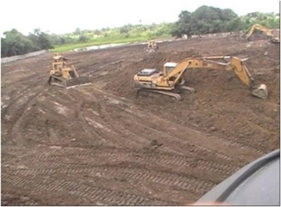
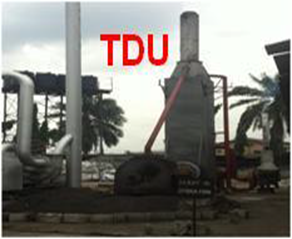
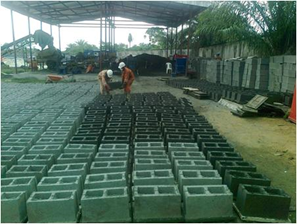
The Ejama Ebubu spill project successfully remediated 30,000m³ of impacted soil over a 5,000m² area with a 6m excavation depth, contributing to a total of 15,000cm³ cubic meters of soil remediated across 120 successfully completed sites.
A combination of techniques was deployed by the management team of the remediation work in Ogoni land. These included:
- Land farming which involved deep excavation and exposure of the impacted soil to air and natural process of hydrocarbon degradation and complementing it with nutrient amendments (NPK). The land farming is a bioremediation technique which the team considers as a more effective and enhanced natural attenuation technique that does not constitute further environmental nuisance.
- Bush clearing and recovery of free phase oil leached out from the stock pile and hot spots.
- Excavation and clean-up of hotspot zone and zone of heavy impact, in order to make the area suitable for replacement of remediated soil from the stockpile. This activity is to run concurrently with segregation of burnt materials from the loosely impacted soil in the stockpile and construction of storm water drainage system.
- Remediation of heavily impacted soil from the stockpile in the engineered biocell and the fixation of burnt carbonized materials segregated from the stock pile. This activity is to run concurrently with step 3.
- In-situ remediation of soil on which contaminated materials were stockpiled and other areas where contaminant level is above 5,000 mg/kg.
- Land-scarping and installation of additional groundwater monitoring boreholes.
- Thermal Desorption Unit (TDU) for waste streams which included slurry sludge materials and those that were highly carbonized soils. Fixation was used for the burnt carbonized soils. The burnt carbonized materials, were ground to dust forms, mixed with predetermined ratios of cement and sand aggregate and molded into bricks that were used in fencing the Ejama-Ebubu sites and for floor interlocking works.